Hamas Disarmament Strategy Shows Promise Despite Major Political Hurdles
Explore how a comprehensive disarmament plan for Hamas presents opportunities for Gaza's future, though significant political and military obstacles remain in the path to peace.
Hamas Disarmament Plan: A Complex Path Forward
A Hamas disarmament plan has emerged as a potential framework for addressing the escalating crisis in Gaza, offering a glimmer of hope amid an otherwise devastating situation. However, the practical implementation of such an initiative faces formidable challenges rooted in the region's intricate political landscape, ongoing military tensions, and deep-seated distrust between conflicting parties.
Political Realities and Complications
The political dimension of a Hamas disarmament plan represents perhaps the most significant barrier to progress. Multiple stakeholders hold competing interests, and consensus among regional and international actors remains elusive. The complexities inherent in negotiating such agreements are compounded by years of fractured diplomatic relations and ideological differences that continue to shape the region's trajectory.
Historical Context and Trust Deficits
Zero trust has become the operating principle among parties involved in the conflict. This absence of mutual confidence stems from decades of broken agreements, military escalations, and unmet commitments. When implementing a Hamas disarmament plan, establishing mechanisms to verify compliance becomes exponentially more difficult without foundational trust between negotiating entities.
The Humanitarian Cost and Its Impact on Negotiations
The devastating human toll has created an emotional and moral dimension that complicates rational negotiation processes. Thousands of casualties and widespread destruction throughout Gaza have intensified grievances on all sides, making parties less inclined toward compromise and more resistant to confidence-building measures necessary for disarmament discussions.
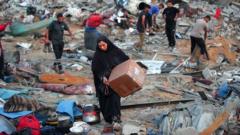
The widespread physical devastation across Gaza—including damaged infrastructure, displaced populations, and destroyed communities—adds another layer of difficulty. Rebuilding efforts and accountability questions must be addressed simultaneously with disarmament negotiations, creating a multifaceted challenge that no single agreement can easily resolve.
Military Considerations and Verification Challenges
From a military perspective, a Hamas disarmament plan would require unprecedented transparency and verification protocols. Monitoring weapons stockpiles across a densely populated region, verifying the surrender of military capabilities, and establishing lasting security guarantees present technical and logistical obstacles that previous peace initiatives have struggled to overcome.
International observers and monitoring mechanisms would need unprecedented access and cooperation, raising additional concerns about sovereignty and national security among involved parties.
A Rare Opportunity Amid Darkness
Despite these monumental obstacles, the Hamas disarmament plan represents one of the most substantive attempts to address underlying security concerns that perpetuate cycles of violence. Unlike purely military solutions, disarmament frameworks offer pathways toward sustainable peace by addressing root causes of conflict.
The plan signals that conversations about long-term stability are possible, even when immediate conditions appear hostile and uncompromising. This represents psychological and diplomatic progress, even if practical implementation remains distant.
International Involvement and Regional Dynamics
Successful execution of any disarmament initiative requires coordinated international support and regional consensus. Countries with influence over Hamas, Israeli decision-makers, and humanitarian organizations must align around shared objectives. The involvement of neighboring states and international bodies could provide the necessary legitimacy and enforcement mechanisms for such agreements.
Looking Toward Feasible Solutions
Moving forward, stakeholders must balance optimism about potential outcomes with realistic acknowledgment of existing barriers. Phased approaches, confidence-building measures, and incremental progress may prove more viable than comprehensive agreements achieved in single negotiations. The Hamas disarmament plan, while ambitious, could serve as a framework for such gradual advancement toward regional stability and lasting peace in Gaza.


