Hamas Disarmament Strategy Faces Major Hurdles Amid Gaza Conflict
Discover why Hamas disarmament remains challenging yet potentially offers renewed hope for Gaza's future amid political complexities and reconstruction efforts.
The Complex Reality of Hamas Disarmament Negotiations
The prospect of Hamas disarmament represents one of the most challenging yet potentially transformative developments in Middle Eastern geopolitics. Despite formidable obstacles that threaten to derail progress, experts acknowledge that Hamas disarmament could provide a meaningful pathway toward stability and recovery for the Gaza Strip.
The fundamental challenge underlying any viable Hamas disarmament initiative stems from the convergence of multiple destabilizing factors. Years of military confrontation, political rivalry, territorial disputes, and accumulated grievances have created an environment of profound mistrust among all stakeholders. The humanitarian cost of sustained conflict—manifested through thousands of casualties and the extensive destruction of civilian infrastructure—compounds these diplomatic complications exponentially.
Political Obstacles and Strategic Complications
Political calculations present perhaps the most formidable barrier to successful Hamas disarmament. All parties involved—whether international mediators, regional players, or local Palestinian factions—maintain divergent interests and strategic objectives that frequently contradict one another. Hamas disarmament cannot be achieved through unilateral declarations or superficial agreements; it demands verifiable mechanisms, international oversight, and concrete security guarantees that remain extraordinarily difficult to establish.
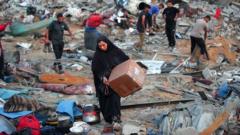
The devastation across Gaza has created additional layers of complexity. Extensive infrastructure damage, humanitarian needs, and the displaced population create urgent pressures that demand simultaneous attention to both security concerns and reconstruction efforts. Traditional approaches to disarmament have proved inadequate when confronted with such multifaceted humanitarian crises.
Trust Deficits and Verification Challenges
Perhaps the most intractable obstacle involves the near-total absence of mutual trust between conflicting parties. Historical precedents of violated agreements, broken ceasefires, and unfulfilled commitments have fostered deep skepticism regarding Hamas disarmament pledges. Any credible disarmament framework must address these accumulated trust deficits through transparent verification procedures, international monitoring mechanisms, and phased implementation strategies that allow confidence-building measures to develop gradually.
Verification presents extraordinary technical and logistical challenges. Gaza's complex geography, the clandestine nature of weapons stockpiles, and the sophistication of modern concealment techniques mean that comprehensive Hamas disarmament verification would require unprecedented international cooperation and resources.
Glimmers of Optimism and Potential Breakthroughs
Despite these substantial impediments, analysts identify genuine prospects for progress in Hamas disarmament negotiations. The catastrophic human toll and extensive destruction have created unprecedented opportunities for reconsideration among conflicting parties. War weariness, humanitarian concerns, and international pressure combine to generate conditions occasionally favorable to negotiated settlements.
Hamas disarmament frameworks have succeeded in other contexts through carefully designed incentive structures. Successful models typically combine security commitments from international powers, economic development initiatives, political participation pathways, and phased implementation schedules that allow stakeholders to gradually build confidence.
Pathways Forward for Hamas Disarmament
Constructive Hamas disarmament processes typically incorporate several critical components. Comprehensive regional dialogue involving all stakeholders creates essential opportunities for articulating interests and identifying common ground. International mediation from respected neutral parties helps bridge seemingly irreconcilable differences and develops creative compromise solutions.
Parallel reconstruction initiatives may prove crucial for successful Hamas disarmament efforts. As communities begin rebuilding destroyed neighborhoods and restoring essential services, populations develop stronger stakes in maintaining peace and preventing renewed conflict. Tangible improvements in living conditions often prove more persuasive than abstract security pledges.
Economic development programs specifically designed to support communities and create employment alternatives can significantly enhance Hamas disarmament prospects. When individuals and families access improved economic opportunities through peaceful means, support for militant organizations typically diminishes.
International Dimensions of Hamas Disarmament
Effective Hamas disarmament cannot succeed through local initiatives alone. Meaningful progress requires sustained international commitment, financial resources for reconstruction, and security guarantees from established global powers. Regional stakeholders must similarly demonstrate willingness to support verifiable Hamas disarmament frameworks through concrete actions and resource commitments.
The international community's approach to Hamas disarmament monitoring and enforcement will substantially influence whether agreements prove durable and effective. Premature withdrawal of international attention or inadequate enforcement mechanisms frequently undermine disarmament initiatives.
Conclusion: Balancing Realism with Possibility
While Hamas disarmament faces substantial practical, political, and verification obstacles, the unprecedented human suffering and material destruction create rare windows of opportunity for transformative change. Success requires recognition of legitimate security concerns, commitment to comprehensive reconstruction, transparent mechanisms for building trust, and sustained international engagement. Though formidably difficult, Hamas disarmament initiatives represent among the most promising paths toward Gaza's eventual recovery and regional stability.


