Hamas Disarmament Plan Encounters Significant Challenges Amid Gaza Reconstruction Hopes
Discover how the ambitious Hamas disarmament initiative faces major obstacles yet represents a potential breakthrough for Gaza's future stability and recovery.
Understanding the Hamas Disarmament Initiative and Its Challenges
The Hamas disarmament plan represents one of the most ambitious attempts to address the fundamental security concerns that have plagued the Gaza region for decades. Political analysts and international observers recognize that while this initiative presents a rare opportunity for meaningful progress, the path toward implementation remains fraught with unprecedented complications and deeply entrenched obstacles that reflect the complexity of the Israeli-Palestinian conflict.
The intersection of political maneuvering, military realities, profound mistrust between parties, and the devastating human cost of ongoing conflicts creates an environment where negotiating any comprehensive agreement becomes extraordinarily difficult. The destruction witnessed across Gaza and the loss of thousands of lives have left scars that run far deeper than physical infrastructure, fundamentally affecting the psychological landscape of peace negotiations.
The Political Landscape and Negotiation Complexities
Political dynamics present perhaps the most formidable barrier to advancing the Hamas disarmament plan. Multiple stakeholders maintain conflicting objectives and incompatible visions for Gaza's future. Regional powers, international actors, Israeli leadership, Palestinian factions, and humanitarian organizations all bring distinct agendas to the negotiating table, creating a labyrinth of competing interests that must somehow be reconciled.
The principle of zero trust—wherein parties assume the worst intentions of counterparts—permeates discussions at every level. This defensive posture, while understandable given historical precedents, fundamentally constrains the willingness of negotiators to make meaningful concessions or embrace novel frameworks for cooperation.
Military Realities and Security Concerns
Security considerations form another critical dimension of why the Hamas disarmament plan faces such significant hurdles. The military infrastructure that Hamas has developed over decades cannot simply vanish through diplomatic pronouncements. Questions surrounding verification mechanisms, enforcement protocols, and ongoing security arrangements remain contentious points of disagreement.
Neither side can realistically afford to trust that compliance will occur without robust monitoring systems and international oversight. The challenge of dismantling weapons caches, dissolving armed brigades, and fundamentally restructuring organizational hierarchies requires mechanisms that transcend traditional agreements.
The Human Cost and Its Impact on Peace Prospects
The tragic loss of thousands of lives has created emotional barriers that rational diplomatic processes cannot easily overcome. Families mourning their dead, communities traumatized by violence, and populations exhausted by conflict bring legitimate grievances to peace discussions.
These human dimensions render the Hamas disarmament plan not merely a technical exercise in military restructuring but rather a profound moral and psychological challenge. Reconciliation cannot proceed without addressing justice, accountability, and the legitimate need for societies to process collective trauma.
Physical Destruction and Reconstruction Requirements
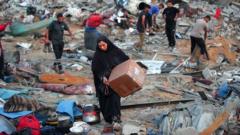
The extensive destruction of Gaza's infrastructure—homes, hospitals, schools, water systems, and power generation facilities—creates enormous practical obstacles to implementing any disarmament agreement. Reconstruction requires massive financial resources, international cooperation, and a stable security environment that currently does not exist.
The Hamas disarmament plan would need to occur simultaneously with humanitarian reconstruction efforts, creating coordination challenges that international bodies struggle to manage effectively.
The Glimmer of Hope Within Challenges
Despite these formidable obstacles, the Hamas disarmament plan offers something historically rare: a concrete framework through which parties might envision a different future. The very fact that such initiatives are being discussed suggests that all stakeholders recognize the unsustainability of the current trajectory.
International attention, humanitarian concern, and the desire among many Palestinians and Israelis for an end to violence create conditions where progress, though difficult, remains theoretically achievable. Previous conflict resolutions elsewhere have demonstrated that even seemingly insurmountable obstacles can be overcome through sustained commitment and creative diplomacy.
Conclusion
The Hamas disarmament plan embodies both the profound difficulties inherent in Middle Eastern peace processes and the persistent human aspiration toward peaceful coexistence. While political complexities, security concerns, historical mistrust, and humanitarian needs present genuine obstacles, the emergence of such proposals suggests that a different future remains imaginable. Realizing that vision will require extraordinary diplomatic skill, international support, and genuine commitment from all parties to prioritize shared survival over perpetuated conflict.


