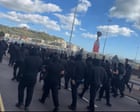
Far-Right Activists Rally at Portsmouth Over Migrant Boat
Hundreds of far-right protesters gathered at Portsmouth following the interception of a small boat carrying 140 asylum seekers. An influencer livestreamed the event urging supporters to block coaches.

Major Far-Right Protest at Portsmouth Following Migrant Boat Interception
A significant gathering of far-right activists took place at Portsmouth after authorities intercepted a small vessel carrying approximately 140 asylum seekers approaching the English coast. The incident marked a notable escalation in organized anti-migrant demonstrations at UK ports, with far-right protesters attempting to obstruct the processing and transfer of newly arrived migrants. The coordinated response highlighted growing tensions surrounding immigration policy and border security in the United Kingdom.
Details of the Maritime Interception
The small boat carrying asylum seekers was intercepted heading toward Portsmouth's coast, prompting an extensive emergency response involving multiple maritime assets. Authorities deployed a helicopter, an aeroplane, and multiple lifeboats to manage the situation and ensure the safety of those aboard the vessel. This represented the first instance of such a large number of asylum seekers being brought to Portsmouth in a single interception, making it a significant event in the port's recent history.
Coordinated Social Media Campaign
An influencer with substantial social media presence livestreamed the event to followers, explicitly calling for men to travel to the port with the stated objective of blocking coaches transporting the asylum seekers from departing. This digital mobilization strategy proved effective in rallying far-right activists to the location, demonstrating how social media platforms are increasingly utilized to coordinate real-world protests and demonstrations against immigration.
Processing and Transfer Operations
Following the interception, the 140 individuals aboard the small boat were brought safely to shore at Portsmouth. The Home Office's predetermined protocol involved transferring the asylum seekers to Manston, a processing facility located outside Ramsgate in Kent. This facility serves as the primary reception center for asylum seekers arriving via small boats across southern England, where their cases undergo initial assessment and processing procedures.
Unprecedented Nature of the Demonstration
The far-right protest at Portsmouth represented a notable development in anti-migrant activism within the United Kingdom. This was the first documented instance of such a large organized group of anti-migrant protesters attempting to physically obstruct the processing and movement of newly arrived asylum seekers at a UK port. Previous demonstrations had typically focused on awareness-raising rather than direct intervention in government operations, making this event a significant escalation in tactics employed by far-right groups opposed to asylum seekers entering the country.
Implications for Border Security and Public Order
The convergence of far-right activists at Portsmouth raised important questions regarding public order management, border security protocols, and law enforcement capacity to manage large-scale demonstrations at sensitive infrastructure locations. The incident underscored the challenges facing authorities in balancing the rights to peaceful protest with the operational requirements of processing asylum applications and maintaining order at ports of entry. Future arrivals and processing operations would likely necessitate enhanced security measures and coordination between multiple government agencies.
Context of Migration Debates
These far-right protests occurred against a backdrop of ongoing national debate regarding asylum policy, immigration numbers, and border control procedures in the United Kingdom. The small boat interception and subsequent demonstration reflected broader societal divisions on immigration policy, with the far-right activists' actions representing one perspective within these discussions. The incident contributed to the polarized discourse surrounding how the UK should manage asylum seekers arriving via maritime routes.